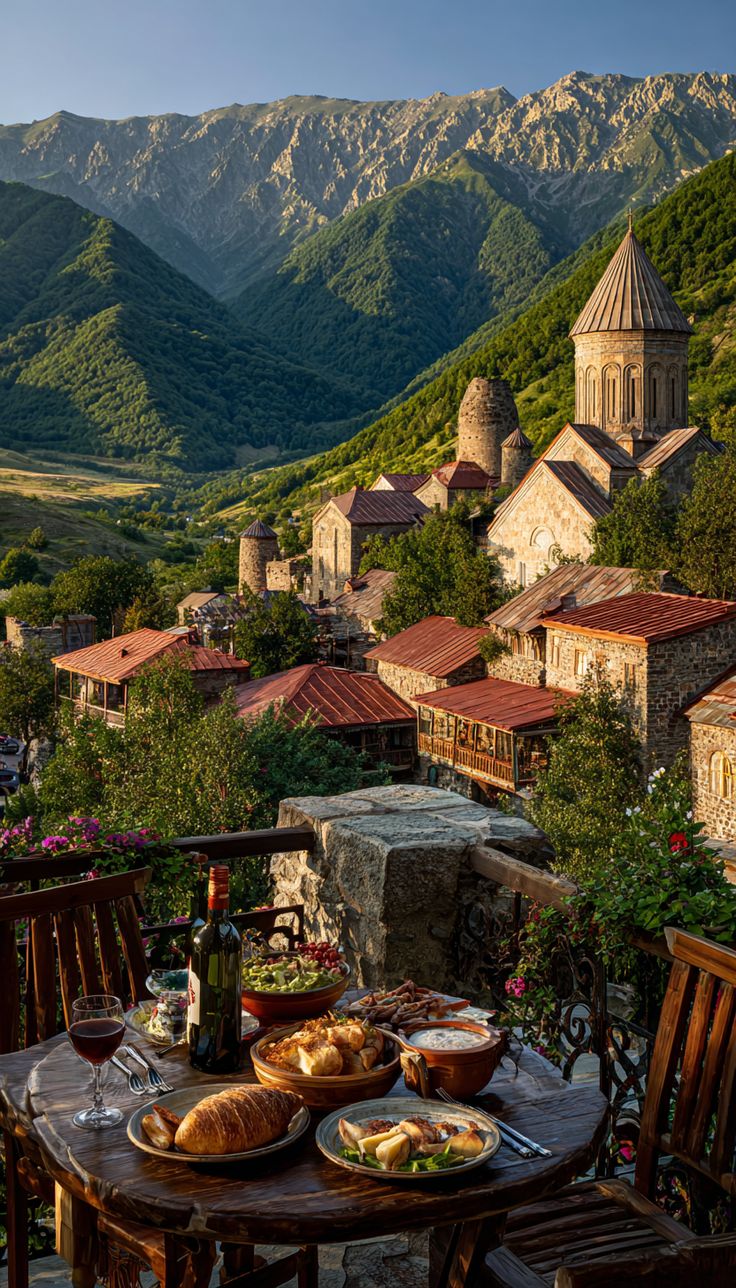
Nestled at the intersection of Eastern Europe and Western Asia, Georgia (known locally as Sakartvelo) is a country that defies simple categorization. It is a land of dramatic contrasts: where 5,000-meter Caucasian peaks overlook sub-tropical Black Sea shores, and where 8,000-year-old winemaking traditions meet a booming 21st-century tech scene.
As of early 2026, Georgia has solidified its reputation as one of the world’s most resilient and fastest-growing travel destinations, projected to lead the Caucasus in economic growth this year.
A Landscape of Extremes
Georgia’s geography is its most immediate charm. Roughly 85% of the country is mountainous, dominated by the Greater Caucasus to the north and the Lesser Caucasus to the south.
-
The High Peaks: Mount Shkhara and the iconic, cone-shaped Mount Kazbek offer world-class mountaineering and skiing in resorts like Gudauri and Mestia.
-
The Coast: To the west, the Adjara region offers a Mediterranean feel, with the city of Batumi serving as a "Las Vegas of the Black Sea," full of futuristic skyscrapers and pebble beaches.
-
The Valleys: In the east lies Kakheti, the cradle of wine, where fertile plains are dotted with ancient monasteries and sprawling vineyards.
The World's Kitchen and Cellar
To understand Georgia, you must sit at a Supra (a traditional feast). Georgian culture is built on the philosophy that "a guest is a gift from God."
-
Wine: UNESCO recognizes the Georgian Qvevri (clay jar) winemaking method as an intangible heritage. With over 500 indigenous grape varieties, the country produces everything from amber "skin-contact" wines to the naturally sweet Saperavi.
-
Cuisine: The food is a soulful blend of walnuts, pomegranate, fresh herbs, and various cheeses. Highlights include Khachapuri (cheese-filled bread) and Khinkali (spiced meat dumplings), which are as much a cultural ritual as they are a meal.
A Modern Hub for Digital Nomads
In 2025 and 2026, Georgia has become a magnet for international talent. Thanks to a liberal visa policy that allows citizens of nearly 100 countries to live and work remotely for a year, Tbilisi has transformed into a global "Digital Nomad" hub.
-
Economic Momentum: The UN projects Georgia’s GDP to grow by approximately 5.4% in 2026, driven by a massive surge in tourism—which welcomed a record 7.8 million visitors in 2025—and a burgeoning ICT (Information and Communication Technology) sector.
-
Ease of Business: Ranked among the top countries globally for ease of doing business, Georgia attracts significant foreign investment in green energy (hydroelectric) and logistics, aiming to be a key transit link between Europe and Asia.
History Etched in Stone
Georgia's history is a story of survival. Having been part of the Roman, Persian, Byzantine, Mongol, and Ottoman spheres before its 70-year stint in the Soviet Union, the country has maintained a fierce sense of identity.
-
Language: The Georgian alphabet is one of only 14 unique scripts in the world, looking like a series of elegant, rounded swirls.
-
Religion: As one of the earliest nations to adopt Christianity (early 4th century), the country is filled with ancient stone churches. The UNESCO-listed Mtskheta and the cave city of Vardzia remain testament to this enduring faith.
Experience Georgia Today
Whether you are exploring the "Old Town" of Tbilisi with its colorful wooden balconies and sulfur baths, or hiking the remote towers of Svaneti, Georgia offers an authenticity that is becoming rare in the modern world.
Would you like me to create a 7-day itinerary for a trip to Georgia, or perhaps a guide to the best Georgian wines to try?